
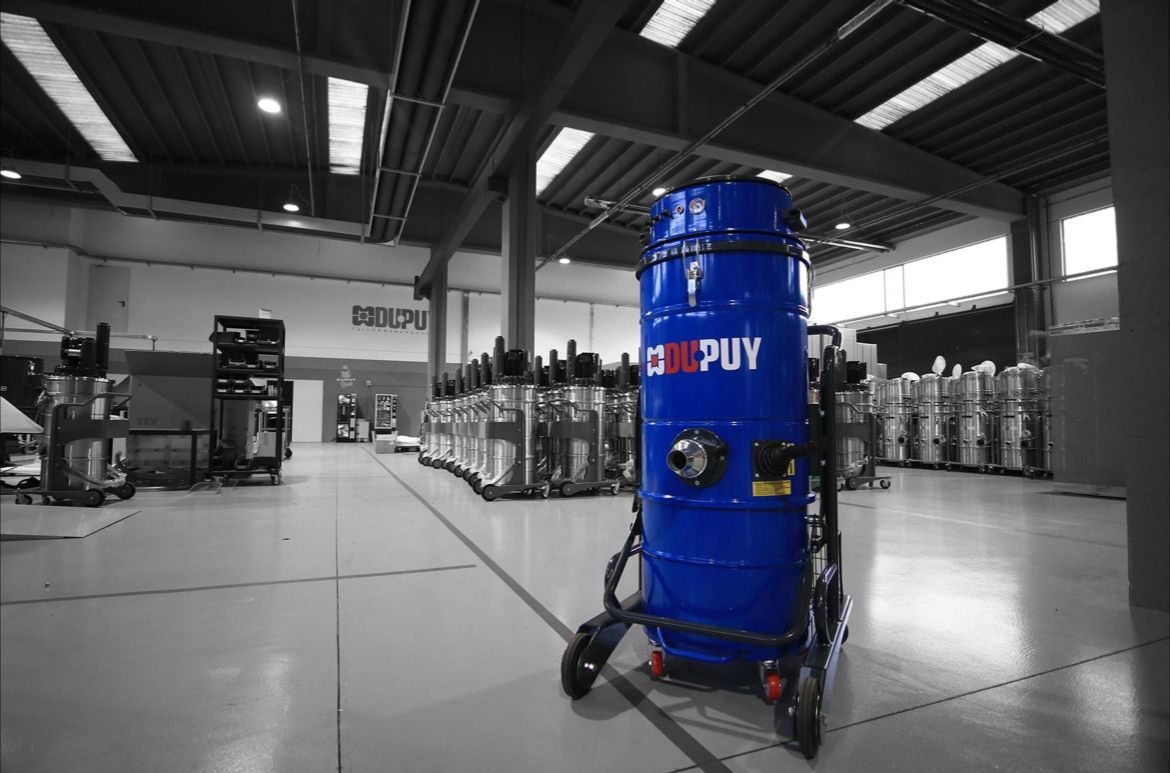
An industrial vacuum is built to last. Properly maintained, a good machine can run for years in demanding conditions. But nothing lasts forever, and holding on to a vacuum that’s past its best can quietly cost your business more than replacing it would.
Falling performance, rising repair bills, and growing safety or compliance concerns are all signs that an ageing machine is becoming a liability. Here are the key warning signs, and how to decide whether to repair, upgrade, or replace.
1. Suction Has Dropped and Won’t Recover
Weak suction is the most common complaint, and it isn’t always a sign the machine is finished. Blocked hoses, a full container, or a clogged filter can all cause it, and these are easy fixes.
The warning sign is suction that stays poor after you’ve checked all of those. If a new filter, a clear hose, and an empty container make no real difference, the cause is more likely a worn motor, a failing turbine, or internal leaks. At that point, the machine is no longer doing the job it was bought for.
2. Repairs Are Becoming Frequent and Expensive
One breakdown is an inconvenience. A pattern of breakdowns is a trend.
If you’re calling out engineers repeatedly, replacing major components, or struggling to get parts for an older model, it’s worth comparing the cumulative cost of repairs against the cost of a new unit. As a rough guide, if repair costs are approaching a significant share of a replacement’s price, or the machine is out of action regularly, replacement is usually the more economical decision.
Downtime matters too. Every hour a vacuum is out of service is an hour your team is cleaning less effectively, or your production is waiting on it.
3. Your Needs Have Changed
Sometimes the machine hasn’t got worse, but your requirements have changed. Common examples include:
- Production volumes have increased and the machine can’t keep up
- You’re now handling a different material, such as finer dust, liquids, or abrasive material (see our guide to wet vs. dry industrial vacuums)
- You’ve expanded the site or added new processes
- Cleaning is now needed more frequently, or across more locations
A machine that was well matched to your original needs can become the wrong tool for the job as your business evolves.
4. Safety and Compliance Concerns
This is the most serious reason to replace a machine, and one that shouldn’t be put off.
If your site handles combustible dust or flammable materials, equipment used in classified hazardous areas needs to be appropriately certified. An older machine that was never designed for those conditions, or one whose condition no longer inspires confidence, can create real risk. Our guide to ATEX and explosive dust zones explains how zone classification works and what it means for your equipment.
Other safety red flags include:
- Damaged cables, plugs, or housings
- Overheating during normal operation
- Unusual smells, sparks, or noises
- Dust escaping from the machine, which suggests a failing filter or seals
- Missing or illegible rating and certification markings
If you have any doubt about whether a machine is safe or suitable for your environment, take it out of service and get it assessed.
5. Dust Is Escaping Back Into the Air
An industrial vacuum should capture dust, not redistribute it. If you can see a fine haze around the machine, notice dust settling nearby after use, or find that surfaces are dirtier after cleaning, the filtration may have failed or the seals may be worn.
Replacing the filter is the first step. But if fine dust persists, the machine may no longer be capable of the filtration standard your application needs, which is a particular concern where airborne dust affects worker health or product quality.
6. It’s Noisy, Overheating, or Vibrating
Unusual noise, excessive vibration, or a motor that runs hot are signs of mechanical wear. Bearings may be failing, components may be out of balance, or airflow may be restricted internally.
These problems tend to get worse rather than better, and a failing motor can end in a sudden breakdown at the worst possible time.
7. The Machine Is Simply Dated
Industrial vacuum technology has moved on. Modern machines are often quieter, more energy-efficient, easier to clean and maintain, and offer improved filtration compared with older models. We recently covered an example where a new motor head was designed to make demanding extraction work quieter, cleaner, and easier to manage.
If your machine is ageing and struggling to meet modern expectations for noise, efficiency, or cleaning standards, an upgrade can improve the working environment as well as the cleaning performance.
Repair or Replace? A Quick Checklist
Ask yourself:
- Has the problem been diagnosed, and is it a simple fix such as a filter, hose, or seal?
- Are spare parts still readily available for this model?
- How often has the machine broken down in the past year?
- Does the machine still suit what you’re collecting and where you’re using it?
- Are there any safety or compliance concerns?
- Would a newer machine reduce running costs, noise, or maintenance time?
If the answers point to recurring faults, unavailable parts, or a machine that no longer fits the job, replacement is likely to be the better investment.
Replacing Doesn’t Have to Mean Buying New
If budget is a consideration, a replacement doesn’t always mean a brand-new unit. A quality used vacuum unit can be a practical, cost-effective option for the right application. Whichever route you take, ongoing servicing is what keeps a machine performing for longer, which is where our after-sales support comes in.
Talk to Us Before You Decide
Whether you’re weighing up a repair, an upgrade, or a full replacement, it helps to get a second opinion before committing.
Apollo Industrial Supplies is the exclusive UK distributor of DU-PUY industrial vacuum equipment. Browse our new vacuum units, explore the industries we serve, or read what our customers say.
Not sure whether to repair or replace? Get in touch for a no-obligation site survey and we’ll help you work out the best option for your site.
This article is intended as general guidance. Always consult a qualified risk assessor and the equipment manufacturer where safety or compliance is in question.