
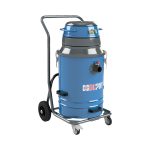
Choosing an industrial vacuum often starts with one question: what are you actually picking up? Dry dust, liquids, sludge, swarf, or a mix of everything? The answer determines whether you need a dry vacuum, a wet vacuum, or a machine that can handle both.
Get it wrong, and you’ll face poor performance, damaged equipment, and in some cases a genuine safety risk. Here’s a clear breakdown of how wet and dry industrial vacuums differ, and how to decide which is right for your site.
What Is a Dry Industrial Vacuum?
A dry industrial vacuum is designed to collect dry materials: dust, powders, granules, shavings, fibres, and general debris. These machines rely on filtration to separate the material from the airflow, so the quality and design of the filter system are central to how well they perform.
Typically used for:
- Fine dust from sanding, grinding, and cutting
- Powders and granules in food, pharmaceutical, and chemical production
- Wood dust and shavings
- Cement, brick, and ceramic dust
- Lint and fibre in textile environments
Key strengths: high-efficiency filtration, suitability for very fine particles, and options for continuous or automated filter cleaning on heavy-duty applications.
Limitations: a dry vacuum isn’t built to handle liquids. Water or oil reaching the filter can clog it, reduce suction, damage the unit, and in electrical machines, create a safety hazard.
What Is a Wet Industrial Vacuum?
A wet industrial vacuum is built to collect liquids and, in many cases, wet slurries and sludge. The internal design, materials, and motor protection are all specified to cope with moisture, and the collection container is typically built to hold and discharge liquid easily.
Typically used for:
- Coolants, oils, and cutting fluids in machining and metalworking
- Water from spills, leaks, and washdowns
- Slurries and sludge in manufacturing and processing
- Wet waste in food production and cleaning operations
Key strengths: safe liquid handling, easy emptying of liquid waste, and construction suited to damp or wet environments.
Limitations: pure wet machines are not designed for fine dry dust collection, where dedicated dry filtration performs better.
What About Wet and Dry Combination Vacuums?
Many industrial vacuums are designed to switch between wet and dry duty, usually by changing the filter configuration. For sites with mixed cleaning needs, one machine that handles both can be a practical and cost-effective choice.
The trade-off is that combination machines are a compromise by design. For a high-volume, specialised dust application, or constant heavy liquid recovery, a dedicated dry or wet unit will generally outperform a general-purpose one. As a rule of thumb: if the work is occasional and varied, versatility pays off; if it’s constant and specialised, specialise.
Wet vs Dry: Side-by-Side
| Dry Vacuum | Wet Vacuum | Wet & Dry | |
| Collects | Dust, powders, granules, debris | Liquids, slurries, sludge | Both, depending on set-up |
| Filtration focus | Fine particle capture | Liquid separation and protection | Switchable configuration |
| Best for | Dust-heavy, powder, and fibre applications | Coolant, oil, and water recovery | Mixed or varied cleaning tasks |
| Main risk if misused | Filter and unit damage if liquids are collected | Poor performance on fine dry dust | Compromise on specialist duties |
Other Factors That Matter as Much as Wet or Dry
Wet or dry is only the starting point. Before choosing a machine, consider:
The material itself. Is it abrasive, oily, fine, fibrous, or hazardous? Different materials put different demands on the unit, filter, and collection container.
Combustible dust and hazardous areas. If your site handles combustible dust or flammable materials, standard equipment may not be suitable. Machines used in classified zones must be appropriately certified, and our guide to ATEX and explosive dust zones explains what that involves. For an example of a hazardous-material requirement solved in practice, see our explosive dust handling case study.
Power source. Industrial vacuums may be electric or compressed-air driven. Compressed-air machines can be a good fit for environments where electrical equipment is a concern, so it’s worth considering which suits your site.
Volume and frequency. A machine used for a few minutes a day has different requirements from one running through a full shift.
Portable or central. A portable unit offers flexibility. A central system suits larger facilities with consistent cleaning needs across multiple points.
Hygiene and cleaning standards. In food, pharmaceutical, and similar settings, how easily a machine can be cleaned and the materials it’s built from can matter just as much as suction power.
Why Not Just Use a Standard Vacuum?
It’s a common question, and the short answer is that standard commercial or household machines aren’t designed for industrial duty cycles, heavy loads, or demanding materials. We cover this in more detail in our guide to industrial vacuums vs. regular vacuums.
Choosing the Right Machine for Your Site
The right choice depends on what you’re collecting, how often, and where. The cost of getting it wrong, in downtime, damaged equipment, or safety risk, is almost always higher than the cost of getting expert advice first.
Apollo Industrial Supplies is the exclusive UK distributor of DU-PUY industrial vacuum equipment, and DU-PUY machines are fully customisable to suit specific applications. Browse our new vacuum units or used vacuum units, explore the industries we serve, and see how our after-sales support keeps your equipment running.
Not sure whether you need wet, dry, or both? Get in touch for a no-obligation site survey, and we’ll help you specify the right machine for your application.
This article is intended as general guidance. Always consult a qualified risk assessor where combustible dust or other hazards may be present on your site.
1 thought on “Wet vs Dry Industrial Vacuums – Key Differences Explained”